If you live in Arkansas and have suddenly discovered small holes, patches of torn-up grass, or areas of disturbed soil in your yard, an armadillo may be responsible.
Armadillos are common throughout Arkansas and can become a frustrating nuisance for homeowners. While these unusual animals generally aren’t interested in getting inside your house, their constant digging and foraging can leave lawns, gardens, flower beds, and landscaping looking like they’ve been torn apart.
Understanding why armadillos dig and what attracts them to your property is the first step toward solving an armadillo problem.
Why Are Armadillos Digging Up My Yard?
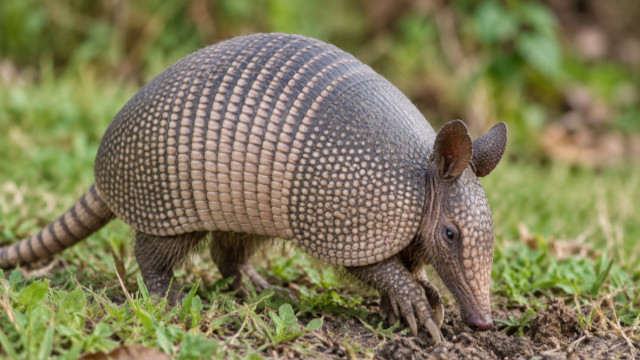
Armadillos spend much of their time searching for food. Their diet includes insects and other invertebrates found in the soil, including grubs, worms, and other small organisms.
When an armadillo detects food beneath the surface, it uses its powerful claws and snout to dig for it.
Unfortunately for homeowners, the animal doesn’t care whether it is digging in a wooded area or in the middle of a carefully maintained lawn.
A single night of foraging can leave numerous small holes scattered across a yard.
Armadillo damage is often especially noticeable around:
- Lawns and grassy areas
- Flower beds
- Gardens
- Mulched landscaping
- Areas near trees and shrubs
- Soft or recently watered soil
If you are finding several small holes appearing overnight, an armadillo should be on your list of possible culprits.
What Does Armadillo Damage Look Like?
Armadillo digging can range from a few isolated holes to extensive damage across an entire yard.
The most recognizable damage consists of shallow, cone-shaped holes where an armadillo has been digging for insects. You may also find larger excavated areas where an animal has spent more time searching for food.
In addition to digging for food, armadillos may excavate burrows for shelter.
These burrows can be considerably larger than the small feeding holes scattered throughout the yard.
Armadillos may establish burrows beneath:
- Porches and decks
- Sheds
- Concrete slabs
- Brush piles
- Wood piles
- Landscaping
- Retaining walls
A burrow located underneath or next to a structure can become a bigger concern than simple lawn damage.
Why Do Armadillos Like Some Yards More Than Others?
Food availability is one of the biggest factors.
A yard with plenty of insects and other soil-dwelling organisms can provide an attractive feeding area for an armadillo.
Moist soil can also be easier to dig than hard, dry ground. This is one reason homeowners may notice increased armadillo activity after rain or irrigation.
Landscaping can provide additional shelter and cover, while gardens and areas with loose soil can make digging easier.
However, the presence of an armadillo doesn’t necessarily mean there is something wrong with your lawn.
Sometimes the animal is simply passing through while searching for food.
The problem occurs when it repeatedly returns to the same property.
Are Armadillos Dangerous?
Armadillos generally aren’t aggressive toward people and typically want nothing to do with humans.
That doesn’t mean you should attempt to handle one.
Like any wild animal, an armadillo can defend itself if it feels threatened. Wildlife should always be observed from a safe distance rather than approached, cornered, or handled.
Armadillos can also carry parasites and pathogens, so homeowners should avoid direct contact with wild armadillos and should use appropriate precautions when dealing with areas contaminated by wildlife.
Can I Get Rid of Armadillos With a Repellent?
There are numerous products and home remedies advertised as ways to keep armadillos out of yards.
The problem is that many supposed armadillo repellents provide inconsistent results.
Strong odors, homemade mixtures, ultrasonic devices, and other deterrents are often suggested online. Unfortunately, there is no magic product that will reliably convince a determined armadillo to abandon an attractive food source.
The same problem applies to many wildlife-control “hacks.”
If an animal has access to food and suitable habitat, making one area unpleasant doesn’t necessarily solve the underlying problem.
How Do You Keep Armadillos Out of Your Yard?
The most effective strategy depends on the individual property.
Start by looking at the conditions that may be attracting the animal.
Reducing unnecessary sources of food and making areas around structures less attractive can help. Maintaining landscaping, eliminating potential shelter areas, and addressing locations where armadillos are establishing burrows can also be beneficial.
However, once an armadillo has established a pattern of using your property, professional wildlife control may be necessary.
A wildlife-control professional can determine whether the animal is simply passing through, actively feeding in the yard, or using a burrow on the property.
Don’t Fill an Active Armadillo Burrow Without Checking First
One mistake homeowners sometimes make is immediately filling a burrow as soon as they discover it.
Before sealing or filling a suspected wildlife den, you should determine whether an animal is currently using it.
Sealing an occupied burrow can trap an animal underground and create an entirely different wildlife problem.
The same principle applies to any wildlife opening around a home or structure.
Make sure the animal is out before closing the door.
Professional Armadillo Removal in Arkansas
Armadillos can be one of the more frustrating nuisance wildlife problems for Arkansas homeowners because the damage they cause can happen quickly.
The good news is that an armadillo tearing up your lawn doesn’t necessarily mean you have a permanent wildlife problem.
The first step is determining what is bringing the animal onto your property and whether it has established a burrow or is simply passing through while searching for food.
If armadillo damage continues despite your efforts, a professional wildlife-control company can evaluate the property and recommend an appropriate solution.
Don’t Let an Armadillo Destroy Your Lawn
A few holes in the lawn may not seem like a serious problem, but repeated armadillo activity can quickly turn a well-maintained yard into a collection of torn-up grass and disturbed soil.
If you’re finding new holes every morning, don’t assume it’s a mole or another common lawn pest.
You may have an armadillo problem.
If armadillos are damaging your Arkansas property, contact a professional wildlife-control company for help identifying the source of the problem and determining the best way to keep the animal from returning.